Lesbian Vampires & Outer Space
Loss of Altitude, The Blood Spattered Bride & some general housekeeping

HOUSEKEEPING
What is my starting point? This newsletter will be divided into three parts:
I. WHAT’S UP?
There are short film nights I organise. I have been neglecting them, which I want to change. This newsletter should hold me accountable to work on the film programming & curation process!
II. WHAT’S ON?
Let‘s ease into writing about film. Mayhaps there is a film, short or long, that has been on my mind, that I want to watch soon, or for some reason want to recommend or talk about briefly.
III. WHAT‘S GOOD?
But I also want to challenge myself. There are feature-length films that are very dear to my heart that I never get the chance to talk about. I want to do this here, ending the post with a ‘bang’ (a slightly longer, more in-depth personal take on a film I love).
So,
I. WHAT’S UP?
Every year, it is my aim to curate, organise and host four short film nights. I started them in October 2024. It went incredibly smoothly in 2025. I am really struggling to get going in 2026. After some internal back-and-forth, I have made a compromise with myself: There will be four short film nights this year – but only two of them will be business as usual. One evening will be a reprise of a programme I showed last year, transposed into a different city. Another one is based on my personal recommendations of short films by Iranian filmmakers, but not hosted/programmed by me. So, the plan is:
25.06.: Iranian Diaspora Short Film Night at Oval Office Bar in Bochum
xx.08.: Arab & Queer reprise in xxxx (to be confirmed)
September: 1st new short film programme
November: 2nd new short film programme
I think that shall suffice to establish this section (and I really just want to move on now).
II. WHAT‘S ON?
SINKFLUG / LOSS OF ALTITUDE

In April, I went to the International Women’s Film Festival (IFFF) in Cologne. German films are one of my blind spots – for some reason I tend to be more drawn to international productions. But the one film that stayed with me the most from the festival programme was Sinkflug (Loss of Altitude, 2026) by director Hoàng Quỳnh Nguyễn, who was born in Vietnam and grew up in Germany, co-written alongside Fanny Scarlet Rocha Bayer.
I consider this director’s statement to be the most apt description of the 12-minute short film:
“SINKFLUG came about from a sense of speechlessness. From a helplessness in the face of a political reality in which injustice occurs systematically – yet hardly anyone chooses to look. We wanted to make a film about precisely this gaze: What does it mean to be part of a system that dehumanizes people – and what does that feel like up close? ... The future is not a metaphor – it is the continuation of what is happening right now.”
In films, I tend to get lost in fantasy worlds or the past. It is rare for me to watch a film that feels current, urgent, close to my/our collective reality. Sinkflug does feel close – the rise of racism and fascism, deportation or „remigration“ as it is belittled, they are real, and happening in Germany and across the world as I type these words. The film feels really tense and dystopian, but realistic. It feels possible – It is already happening. Sinkflug further stayed in my mind as Hoàng Quỳnh Nguyễn talked about how difficult the project was to see through. It was developed as part of her degree and every person in power kept discouraging her from making it. The idea was too far-fetched, they didn’t get it, shouldn’t the person being deported be Black?
I think it‘s both shocking and telling that the middle-aged white men in positions of power at her university do not understand the film or see the need for it. It is precisely why I see the urgent need for the film, and wanted to highlight it here.
III. WHAT‘S GOOD?
LA NOVIA ENSANGRENTADA / THE BLOOD SPATTERED BRIDE
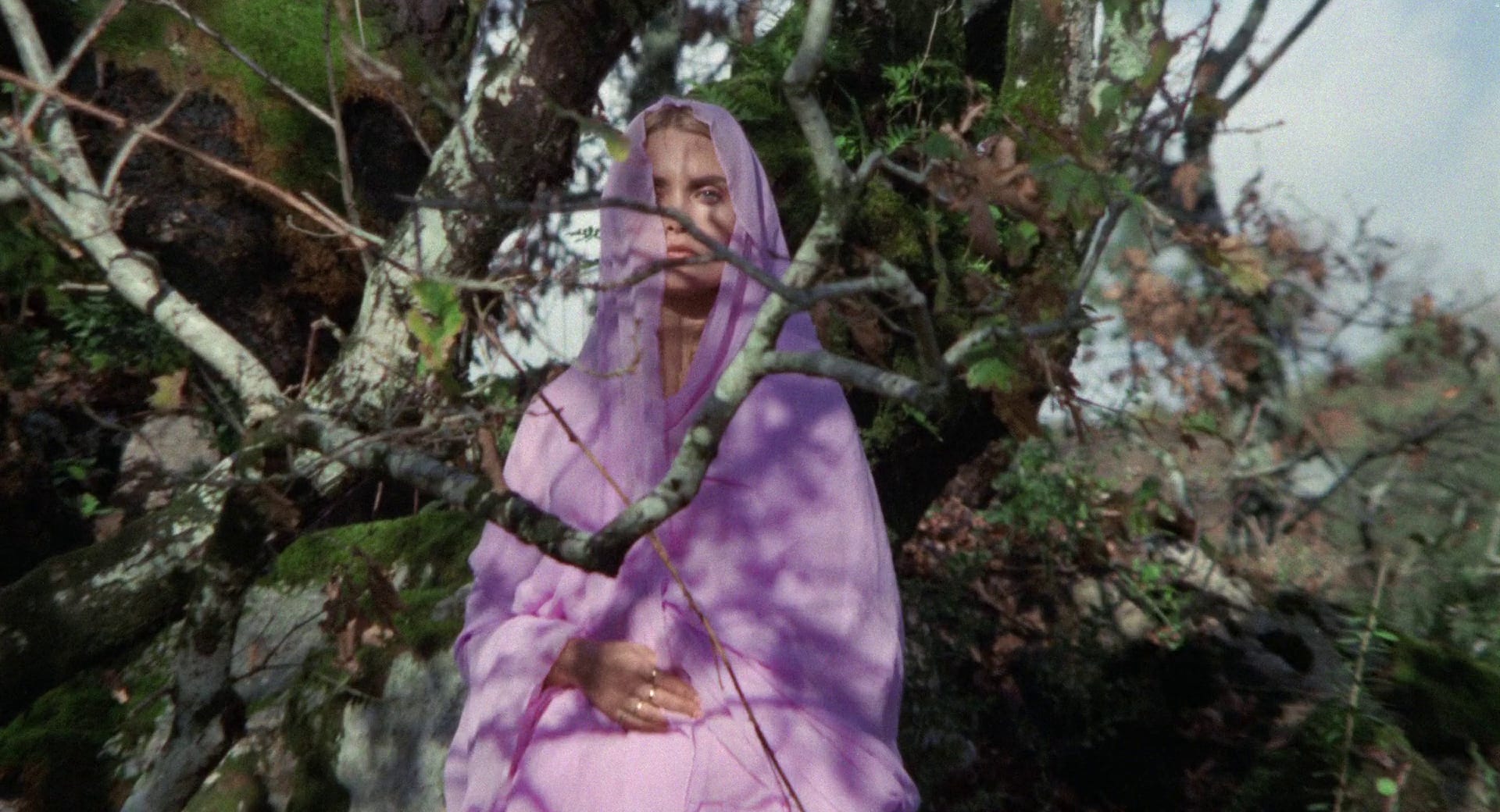
In October of 2024, I discovered that there is a history of lesbian vampires in horror films of the 20th century. A year later, enthralled by the lesbian vampire still, I had to decide on a topic for my bachelor’s thesis. After some research, I watched two films in preparation: Les Lèvres rouges (“Daughters of Darkness”, 1971, Harry Kümel) and La novia ensangrentada (“The Blood Spattered Bride”, 1972, Vicente Aranda). With a stunning two-for-two, I immediately found the films I would base my thesis on. But there are non-academic things left unsaid, especially for La novia ensangrentada. I do not know a single person who has seen or heard of the film. That is an injustice I seek to correct.
Before I sing the film’s praises, some pre-emptive notes: Horror films of the 1970s featuring lesbian vampires were written and directed by, and primarily for, men. The male gaze dominates the female characters in these sexploitation-era films, even in the ones I like. Part of what made the lesbian vampire a popular trend at that time was the relaxation of censorship codes in Western countries: Violence, nudity and sex were an attempt to bring profit to the horror genre – before the pornography boom of the ‘80s left them obsolete.
There was also a narrative trend in these lesbian vampire films: The heroic husband saves his helpless, innocent wife from the corruption of the evil, perverted lesbian vampire. Though there are films that break this formula: La novia ensangrentada being one of them, and my personal favourite to do so.
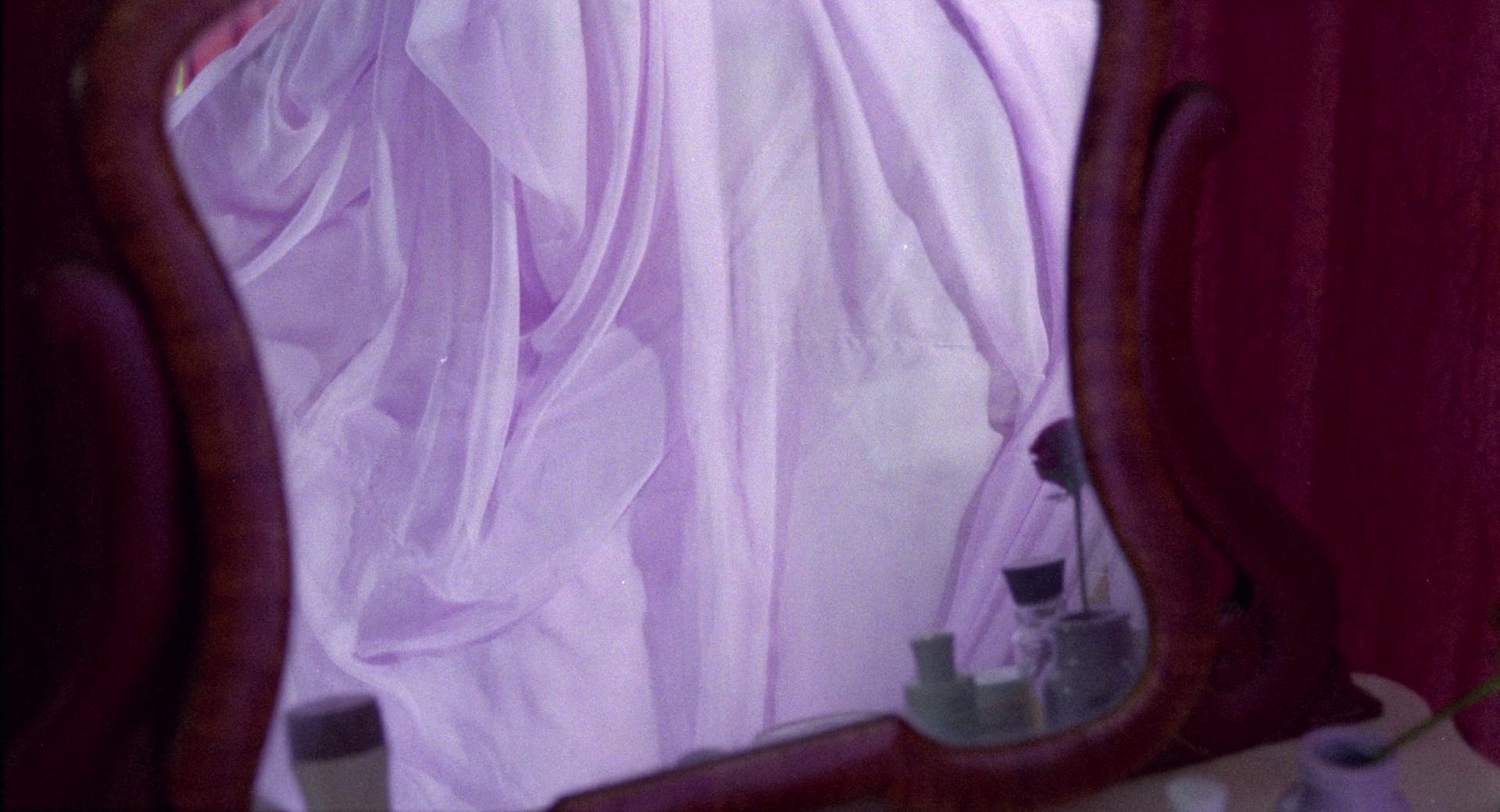
The most personally appealing aspect of the film happens to be the costume design of the lesbian vampire. You might expect black, red, leather, latex – signifiers of danger and desire. But Carmila is different: She is dressed in pastel purple colours and flowy fabrics throughout the film. She does not seem intimidating or scary. Instead, she kind of dresses like me, or: She dresses like a lesbian. Purple has been a queer and lesbian signifier for a long time, in different forms (see this article by lesbian fashion historian Eleanor Medhurst). Around the time of the film‘s release, specifically lavender became a shade widely used in Western lesbian-feminist activism. To me, Carmila is a Lavender Menace, a lesbian-feminist figure. For personal identification with her, it also helps that she has the intriguing habit of wearing unusually many rings — a very contemporary alternative-queer signifier.
From now on, spoilers ahead!
In the first lesbian vampire film of the ‘70s that I ever watched – Le Frisson des vampires (“The Shiver of the Vampires”, 1971, Jean Rollin) – the lesbian vampire is sexually assaulted by two men to pay for her transgressions. La novia ensangrentada includes sexual assault as well – though it is treated seriously, as violence, enacted by the husband to his wife. The horror of the film is not the vampire, it is the abusive husband of the protagonist, Susan. Instead, the lesbian vampire Carmila offers up an alternative: empowerment, agency, revenge.
Inspired by the 1872 novella Carmilla, this adaptation further exposes the uselessness of the male figures in the original text. The film accordingly features the roles of the patriarch (father turned into husband) and a doctor, alongside a hunter. None of them have names though. Carmila, Susan and Carol (the hunter‘s daughter who is entering puberty and discovering her lesbian/vampiric awakening) are the only named characters. They are at the centre of the narrative, they are the important figures.
The camera also takes no pleasure in how the violence against these women is depicted: It cuts away or frames the acts in ways to highlight the patriarchal violence. The film does, however, take erotic pleasure in the violence – revenge – enacted by the women. The men are stabbed, shot, literally emasculated, their wounds and blood on display for the characters and the viewer to live out their revenge fantasies.
It is not Susan’s husband specifically who is the problem – He is unnamed: He could be any man, he is every man. The filmmaker proposed the following slogan for his film: «¿Matrimonio o violación legal?» (Marriage or lawful rape?). Thus, to me it is apparent that the film sets out to criticise the institutions of patriarchy and marriage from the get-go. While I was researching for my thesis, I found a paper by Ian Olney claiming that it was not uncommon for Spanish horror films of the time to address the „plight of women in a patriarchal world“, as the 1970s were the last few years of the Franco dictatorship in Spain. Should you hopefully decide to watch La novia ensangrentada after reading this, and should you then like the film, I would recommend Vampyros Lesbos (1971) by Jess Franco for further Spanish hot lesbian vampire films that deal with women’s agency.
Brb updating my letterbox watchlist